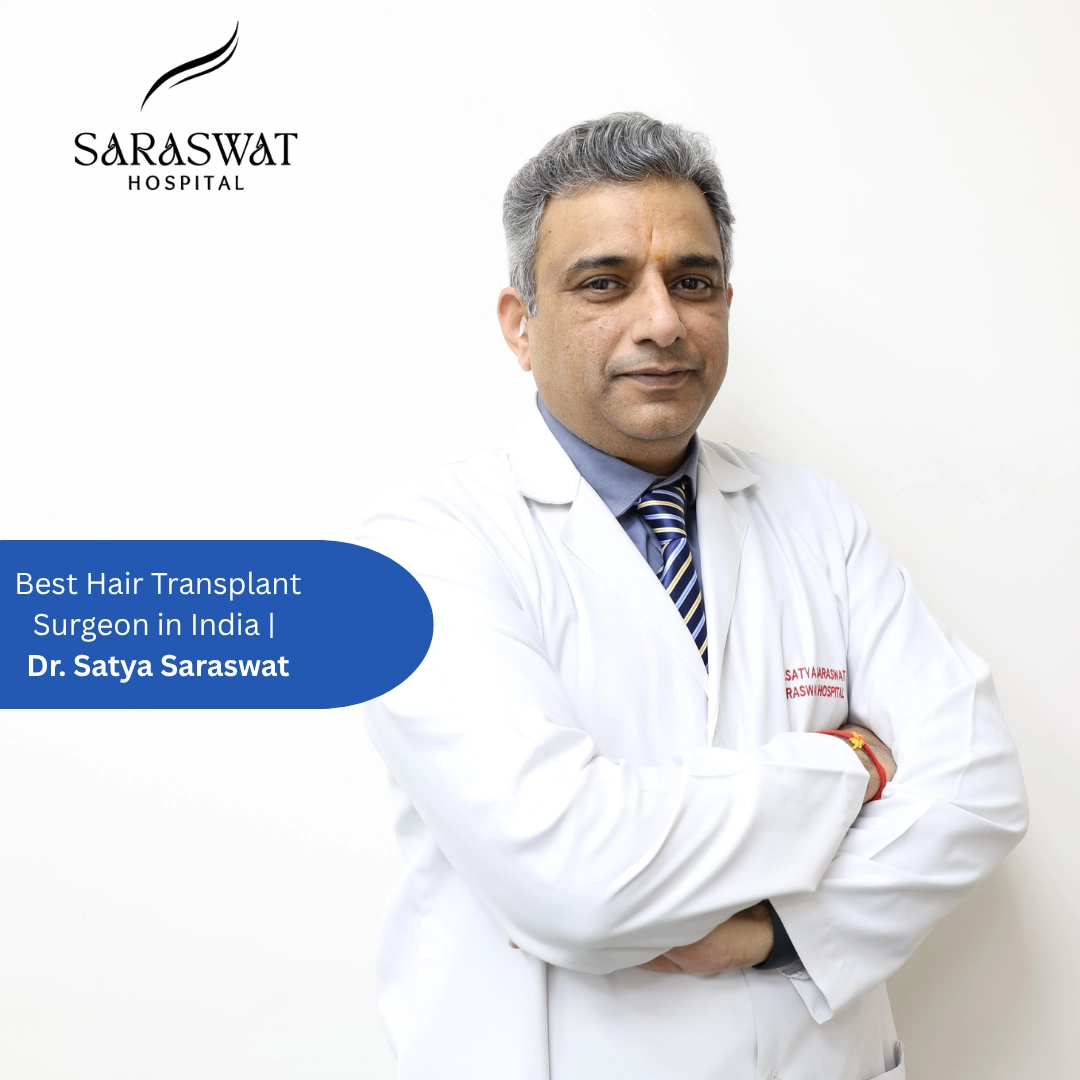
India is a country with skilled and top hair transplant surgeons, and Dr. Satya Saraswat is one of the respected figures in the hair restoration community. As a cosmetic and plastic surgeon, he has performed thousands of cosmetic and hair transplant procedures. One thing which make his apart from other surgeons is his ethical and patient-centric approach, with the use of advanced equipment, which is the key in prociding best and natural outcomes.
What Defines a Top Hair Restoration Surgeon?
Board certification and international fellowships serve as the primary indicators of a surgeon’s technical proficiency and ethical standing. Dr. Satya Saraswat holds the Diplomate status from the American Board of Hair Restoration Surgery (ABHRS), a credential held by only a small fraction of practitioners globally. This certification ensures that the surgeon adheres to rigorous safety protocols and stays updated on the latest surgical advancements. Selecting a surgeon with these credentials minimizes the risk of follicular transection and poor aesthetic outcomes. Understanding these qualifications is essential when evaluating specific surgical methods.
How do FUE and FUT Techniques Differ?
Follicular Unit Extraction (FUE) involves the individual removal of follicles, whereas Follicular Unit Transplantation (FUT) requires the excision of a narrow strip of scalp tissue. FUE is preferred for patients who wish to keep their hair short, as it results in microscopic “dot” scars rather than a linear scar. FUT remains a viable option for patients requiring a high volume of grafts in a single session due to its efficiency in donor harvesting. The choice between these methods depends on the patient’s scalp laxity and the required graft count.
| Feature | FUE (Follicular Unit Extraction) | FUT (Follicular Unit Transplantation) |
| Scarring | Discrete circular scars | Linear scar in the donor area |
| Recovery | 3–5 days for surface healing | 10–14 days for suture removal |
| Graft Yield | High, but time-intensive | Maximum yield for large sessions |
| Suitability | Best for small/medium areas | Best for advanced baldness |
Determining the right technique requires a formal diagnosis of the underlying cause of hair loss.
When is Hair Transplantation Medically Indicated?
Surgical intervention is indicated when non-surgical therapies like Minoxidil or Finasteride fail to arrest hair loss or provide sufficient density. Clinical guidelines suggest that candidates should have a stable donor area and realistic expectations regarding the density of the recipient site. Surgery is often recommended for patients with Grade III to Grade VII hair loss on the Norwood Scale. A thorough consultation rules out temporary conditions like alopecia areata to confirm the patient’s candidacy for hair restoration. These medical indications are directly linked to the biological triggers of thinning.
What Triggers Androgenetic Alopecia and Thinning?
- DHT-Induced Miniaturization: The primary driver of hair thinning is the sensitivity of follicles to Dihydrotestosterone (DHT), which triggers a progressive reduction in follicle size.
- Genetic Predisposition: Both maternal and paternal lineages dictate the specific pattern of loss and the chronological age of onset.
- Secondary Pathological Factors: Hormonal fluctuations, chronic stress-induced cortisol spikes, and clinical deficiencies in iron or protein further exacerbate thinning.
- Early Diagnostic Value: Prompt identification of these triggers enables a more effective integration of medical and surgical treatment modalities.
- Specialized Oversight: The complexity of these biological triggers necessitates a surgeon with specialized international training to manage long-term restoration.
Why do FISHRS and ABHRS Credentials Matter?
The Fellow of the International Society of Hair Restoration Surgery (FISHRS) title is a recognition of a surgeon’s long-term commitment to the field and clinical excellence. Dr. Satya Saraswat (MBBS, MS, MCh, FISHRS, DNB (Gold Medalist) achieved this fellowship at the 33rd ISHRS World Congress in Berlin in 2025, marking him as a leader in global hair restoration standards. These organizations mandate continuous medical education (CME), ensuring the surgeon uses the latest evidence-based techniques. Patients benefit from lower complication rates and more natural-looking results when treated by such specialists. Modern clinics now augment this expertise with computational diagnostics.

How Does AI Improve Hair Transplant Planning?
Dr. Satya Saraswat has introduced an application called the Saraswat Hospital Peek AI App. You can download this application from Google Play Store and iOS App Store. This app uses artificial intelligence and generated before and after hair transplant previews for the patients to visualize their hairline and transformation.
Dr. Satya Saraswat and Dr. Preeti Saraswat have also actively attended various ABHRS and ISHRS conferences, held in different countries, where surgeons from all over the world share their experience and talk about new inventions and technology in hair restoration.
Why Choose Surgery for Hair Restoration?
Medications and therapies can reduce hair loss, but a hair transplant surgery can offer you long-term results with natural looking hairline. The surgeon performs the procedure under local anaesthesia, making it safe. An experienced and skilled hair transplant surgeon uses the latest and advanced tools, such as the Choi Implanter Pen, for a safe and precise hair transplant procedure.
What is the Postoperative Hair Recovery Timeline?
The recovery process follows a clinical timeline that requires patience and strict adherence to post-operative protocols:
- Days 12-15: You will experience shedding of hair after 12-15 days of hair transplant.
- Weeks 2–4: The initial shedding phase, medically termed telogen effluvium, occurs as transplanted follicles enter a temporary resting state.
- Months 3–4: New hair shafts typically begin to emerge from the transplanted follicles, marking the start of visible regrowth.
- Month 6: Patients can expect significant density improvements as the hair count increases and the shafts thicken.
- Month 12: Final aesthetic results stabilize, revealing the full outcome of the restoration.
- Graft Survival: Absolute adherence to post-operative care—specifically avoiding strenuous exercise and direct UV exposure—is vital to ensure the long-term viability of the grafts.
Conclusion
Choosing the best hair transplant surgeon and following all the post-procedure care is very crucial for achieving natural and long-term results. An experienced and internationally recognized surgeon will always make sure the patient safety and provide you with all the information about hair transplant.
Follow us on:- Facebook, Instagram, Pinterest, Youtube