
Hair transplantation is one of the major treatments for hair loss, wherein hair follicles are transferred from one part of the body to another. Still, one of the most frequently asked questions is will my donor hair grow back or not? Understanding this is an essential part of hair transplantation. The simple reason is that the entire success ratio of the transplantation depends upon the availability and quality of donor hair.
In this guide, we will cover what happens to the donor’s hair once it has been transplanted. Whether or not it regrows, and how different methods of hair transplantation are conducted, such as the FUE hair transplant method versus the FUT hair transplant method.
What is the Permanent Zone Donor Site?
The donor area is a specific region at the back and sides of the scalp that is genetically resistant to Dihydrotestosterone (DHT). This “Permanent Zone” serves as the primary reservoir for grafts because the hair moved from here will retain its growth characteristics in the recipient site. Clinical guidelines dictate that only follicles within these specific boundaries should be harvested to ensure long-term survival. Surgeons must evaluate the “Safe Donor Zone” (SDZ) before a hair transplant to avoid extracting hairs that are susceptible to future loss. Understanding these boundaries clarifies why natural regrowth is limited by physiological constraints.
Physiological Limits of Follicle Regeneration
Clinical studies confirm that human hair follicles have zero capacity for self-regeneration once the dermal papilla is excised. During a transplant, the surgeon extracts the complete biological engine of the hair to ensure it survives in its new location. If a follicle were to regrow in the donor site, it would mean the extraction was unsuccessful or the follicle was damaged. Modern restoration focuses on donor management rather than regeneration to preserve scalp aesthetics. The method of extraction significantly impacts how these limits manifest visually.
Variables that Impact the Donor Area?
- Donor Hair Density: This serves as the primary metric for determining the maximum number of follicles that can be harvested without causing visible thinning.
- High Follicular Density: Patients with robust density can sustain a higher volume of graft extraction, as the remaining surrounding hair provides ample cosmetic coverage.
- Low Follicular Density: These cases require a more conservative extraction strategy to avoid a “moth-eaten” appearance or patchy donor site.
- Healing Capacity and Scalp Laxity: These physiological traits dictate the skin’s ability to recover and the final visibility of the extraction points.
- Surgical Technique: All aforementioned variables are managed through specific adjustments in the chosen surgical method (FUE vs. FUT).
Comparing FUE vs FUT Harvest Methods
| Feature | Follicular Unit Excision (FUE) | Follicular Unit Transplantation (FUT) |
| Extraction Method | Individual units via punch (<1mm) | A thin strip of tissue |
| Scarring | Dispersed punctate (dot) scars | Single linear scar |
| Recovery Time | 3–5 days | 10–14 days |
| Graft Yield | Limited by donor density | High yield for large sessions |
FUE involves removing individual units, leaving tiny circular gaps that are virtually invisible when surrounded by healthy hair. FUT hair transplant involves removing a strip of scalp, which is then sutured, potentially leaving a thin line that requires longer hair to conceal. Both methods result in a permanent reduction of total hair count in the donor region. These techniques are executed with high precision in specialized clinical hubs.
Clinical Benefits of Treatment in India
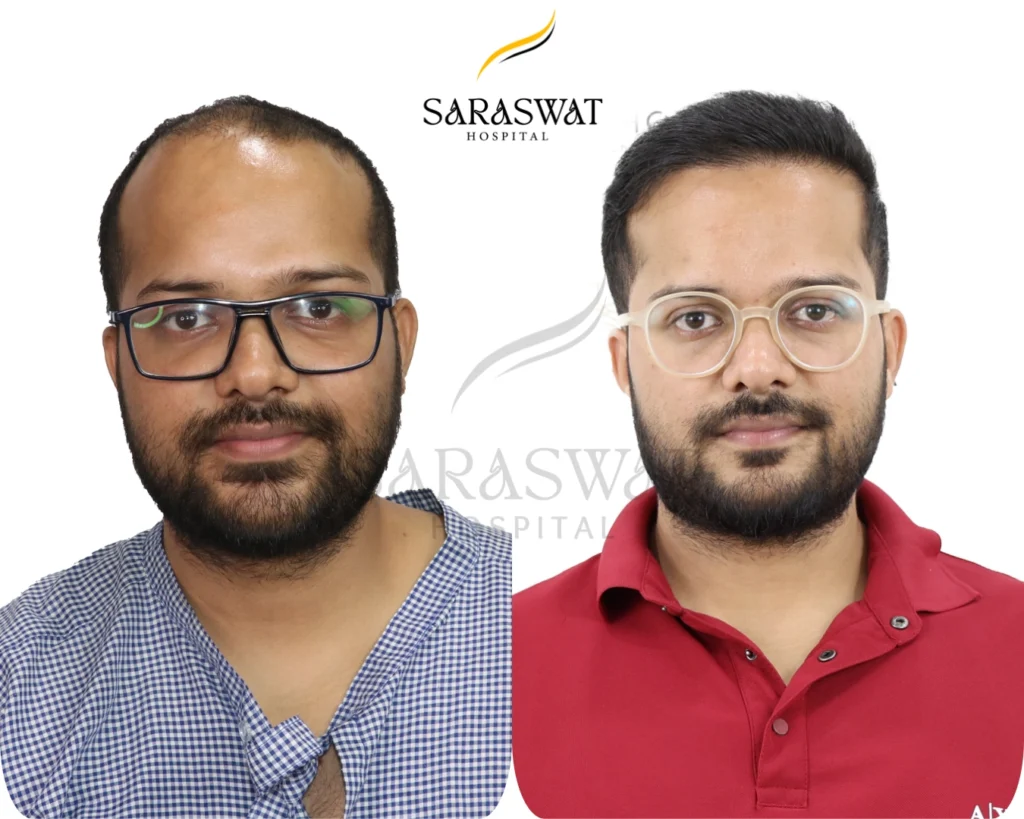
India has established a global standard for hair restoration by integrating advanced robotic assistance and high-magnification trichoscopy. Surgeons in leading centers like Saraswat Hospital utilize Long Hair FUE, FUT, and DHT (Direct Hair Transplant) techniques to maximize graft viability. The cost-to-quality ratio in India allows patients to access specialized care that meets international standards. Rigorous clinical protocols ensure that donor hair reserves are preserved for potential future needs. This long-term planning prevents the premature depletion of hair resources.
Techniques in Hair Transplant
Understanding the technique underlying hair transplantation will make it clear why donor hair does not grow back. Let’s take a closer look at the two primary methods:
- FUE (Follicular Unit Excision): Involves removing individual units, leaving tiny circular gaps that are virtually invisible when surrounded by healthy hair.
- FUT (Follicular Unit Transplantation): Involves removing a strip of scalp, which is then sutured, potentially leaving a thin line that requires longer hair to conceal.
Both methods result in a permanent reduction of total hair count in the donor region. These techniques are executed with high precision in specialized clinical hubs.
Hair Transplant Advantages in India
A hair transplant has several advantages, some of which include:
- Cost-Effective: The most important advantage is the cost-effectiveness of hair transplant in India compared to other countries in the West.
- Surgeon’s Expertise: Certified surgeons always perform hair transplants with the latest technologies and equipments which helps in getting the best results.
- Advanced Techniques: All clinics in India are well-equipped with the most advanced technologies that guarantee the success rate of the surgery.
Post-Operative Care for Optimal Healing
Patients must avoid direct UV exposure and strenuous physical activity for at least 14 days to ensure the extraction sites heal without significant scarring. Keeping the donor area clean and hydrated with saline or prescribed ointments prevents crusting and potential infection. Sleeping in an elevated position reduces edema, which can otherwise put pressure on the newly transplanted follicles. Mechanical trauma, such as scratching or wearing tight hats, must be avoided to prevent graft dislodgment. Proper care clarifies the truth behind common misconceptions regarding hair recovery.
Some Misconceptions About Follicle Regrowth
1. Marketing Claims: Misleading marketing often suggests that certain topical serums or “stem cell” injections can trigger the regrowth of excised donor hair.
2. Scientific Reality: Science confirms that while these treatments can strengthen existing hair, they cannot create a new follicle where one has been surgically removed.
3. Resource Myths: Another common myth is that donor hair is “unlimited” if body hair is used as a secondary source.
4. BHT Limitations: While body hair (BHT) is a viable supplement, it has different growth cycles and textures than scalp hair.
Summary of Donor Site Viability
Donor hair does not grow back because the transplant process involves moving the entire biological unit. Natural results depend on the surgeon’s ability to harvest grafts without compromising the overall density of the donor area. Patients should focus on choosing experienced surgeons who use advanced diagnostic tools to map the safe donor zone. Long-term satisfaction is the result of strategic graft management rather than follicular regeneration.
FAQs
1. Does the hair of the donor grow back?
No, the hair of the donor does not regrow in the spot from which it was harvested. However, once it is transplanted, the hair will start growing normally in its new spot.
2. In how many months does the transplanted hair grow?
Generally, the transplanted hair starts growing at 3 to 4 months. Slowly, it thickens and grows longer, and by the time it reaches one year, it reaches its full length and thickness.
3. Is there a limitation to the number of hair transplantation surgeries?
Yes, however, the limitation in the number of surgeries largely depends on the availability of donor hair.
4. What is the difference between FUE and FUT?
FUE deals with the extraction of the individual follicles, and FUT involves taking a strip of scalp. Both have their advantages and disadvantages.
5. Is there any risk to the donor area?
Hardly any exists, and not at all if accomplished surgeons; however, you might see a little thinning and scarring.
Follow us on:- Facebook, Instagram, Pinterest, Youtube