
Losing hair is one of the most common issues that affects men and others as they age. However, knowing the stages, causes, and some of the most efficient preventive measures in case of hair loss can be of great help to anyone who starts perceiving a hairline recession, whether they have dealt with the problem for many years. This blog will give a clear outlook of the type of hairline regression, look at the most common causes of receding hairline, and, most importantly, actionable measures that can be taken to prevent hairline regression.
What Defines a Receding Hairline?
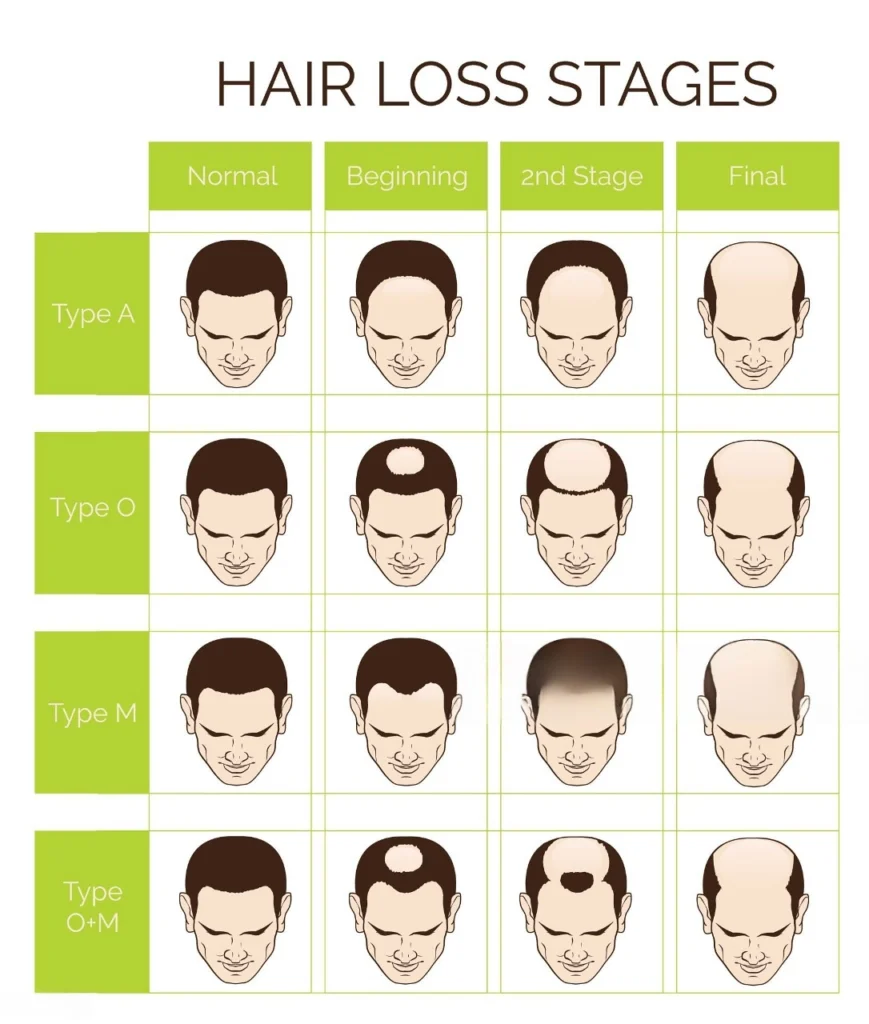
Androgenetic alopecia is a genetically determined disorder characterized by the gradual conversion of terminal hair follicles into smaller vellus follicles. This biological shift primarily targets the frontal hairline and temples, leading to a visible change in the facial frame. Clinical diagnosis requires a physical examination to differentiate between a “maturing” hairline and active pathological recession. Identifying the specific pattern of this transition is essential for selecting a staging protocol.
How Does the Norwood Scale Classify Recession?
The Hamilton-Norwood Scale classifies male pattern baldness into seven distinct stages based on the severity of follicular loss. Stage 1 involves no significant hair loss, whereas Stage 2 marks a symmetrical recession at the temples, often identified as a mature hairline. Stage 3 is the earliest stage of clinically significant balding, typically presenting as a deep “M,” “U,” or “V” shape at the frontal border. Accurate staging dictates whether a patient requires preventative medical therapy or surgical intervention.
Why Does the Hairline Recede Genetically?
Dihydrotestosterone (DHT) acts as the primary androgen responsible for follicular miniaturization in individuals with a genetic predisposition to hair loss. This hormone attaches to receptors in the scalp, progressively shortening the anagen (growth) phase of the hair cycle. As the growth phase diminishes, the resulting hair shafts become thinner and shorter until the follicle becomes dormant. Understanding this hormonal mechanism is critical for evaluating effective pharmacological interventions.
Which Medical Interventions Prevent Further Recession?
- Topical Minoxidil 5% is the primary vasodilator used to extend the anagen phase and increase the diameter of thinning hair follicles (1).
- Clinical data from 2025 suggests that combining this topical treatment with Low-Level Laser Therapy (LLLT) enhances follicular density more effectively than using either treatment in isolation (2).
- Diet and lifestyle factors, such as high cortisol levels from chronic stress, can exacerbate these genetic tendencies by disrupting the hair cycle.
These preventative measures aim to stabilize the hairline before considering permanent restorative procedures.
When is a Hair Transplant Clinically Indicated?
Hair restoration surgery is typically indicated for patients at Norwood Stage 3 or higher who have achieved stability through medical therapy. Modern Follicular Unit Extraction (FUE) utilizes individual graft harvesting to reconstruct a natural-looking hairline with high-density placement. Current 2026 surgical standards emphasize the importance of donor area management to ensure long-term viability and natural angulation of the transplanted follicles. Successful outcomes depend on the surgeon’s ability to mimic the patient’s original hair exit angles and distribution.
Causes of a Receding Hairline
Several factors contribute to this problem, from genetics, such as male and female pattern hair loss, to issues like pollution and global warming. Now let’s have a look at some of the main causes of hairline recession:
1. Genetics (Hereditary Factors)
The most common reasons people develop recessed hairlines include hereditary factors. This is more so for those whose families have had occurrences of male or female pattern baldness; their chances of having a receding hairline are pretty high. This is so because hair loss is often a result of genetics, and hormones play a central role in this matter.
2. Hormonal Changes
Hormonal imbalances are another usual cause of the condition. In men, the hormone called dihydrotestosterone or DHT causes hair follicles to shrink in size and therefore thin the hairline. A woman can also lose hair around the hairline at some point in her life, for instance, during pregnancy or menopause.
3. Poor Diet and Lifestyle
A nutritionally depleted diet and an undesirable mode of living also lead to hair fall. They include poor nutrition, stress, late nights, smoking cigarettes, and too much alcohol, which also affects hair growth.
The further loss of hair can thus be checked, besides making amendments to the above habits by taking standard meals that are rich in vitamins and minerals.
4. Stress and Anxiety
Here, it is important to understand that stress, especially chronic stress, affects the hair greatly. Stress generates cortisol, which interferes with the hair’s growth cycle, resulting in thinning of hair. Avoiding hair loss can also be managed through early education about stress control measures like meditation and exercise.
5. Medical Conditions
Inadequate dieting and nutrient deficiency, hormones, thyroid problems, autoimmune disorders, scalp infections, and hereditary factors tend to cause hair thinning and a low hairline. It is, therefore, important to consult your doctor if you think you have a medical condition that impacts hair.
Prevention Tips
It is often quite impossible to stop hairline recession completely; however, the points below will help you reduce further decline and enhance hair growth health:
Use Hair Growth Products
Several over-the-counter remedies actively combat hair loss and promote hair growth. Minoxidil, one of the most popular treatments, effectively boosts hair regrowth and slows further hair loss. Start using these products early for the best results.
Opt for a Healthy Diet
Rates also highlighted that proper nutrition can very much help in promoting hair health. The diet is directed to hair follicles, and hair loss includes foods with vitamins and minerals such as Vitamin E, B-complex, and Iron. This is the reason why consuming more green vegetables, nuts, and proteins is said to improve your hair health.
Avoid Stress
Earlier on, we made a point that stress may worsen the condition of hair loss. Attempt to include some things in your life that help your stress level come down. Constant stress harms hair; however, with regular physical activities, deep breathing, and mindfulness meditation, you take a step towards decreasing stress.
Consider a Consultation Before opting for Hair Restoration Treatments
If you want to stop hair loss, you may need a hair specialist team. Our treatment portfolio embraces hair transplant services that can help you regain the frontal hair zone.
Protect Your Scalp
It is therefore important to start taking good care of your scalp if you do not want the hair loss situation to get worse. Do not make up your hair in styles that put pressure on hair follicles, do not use heat tools too often, and do not use hair bands that keep your hair too tight.
Maintain a healthy scalp regimen with a gentle shampoo and conditioner that will provide your hair with the nutrition it needs.
Conclusion
For anyone who is experiencing hair loss, it can be very tough, but at least knowing all the foregoing stages, causes, and ways that can prevent this condition is better. Therefore, if you want to find the best solution for hair loss, book an appointment and find many such successful stories.
Sources
(1) Topical Minoxidil 5% is the primary vasodilator used to extend the anagen phase and increase the diameter of thinning hair follicles.
(2) Clinical data from 2025 suggest that combining this topical treatment with Low-Level Laser Therapy (LLLT) enhances follicular density more effectively than using either treatment in isolation.
FAQs
1. Can clinical interventions effectively restore a slowly receding hairline?
Yes, hairline issues can be, most of the time, halted or corrected through treatment like hair transplants, medicines, and better eating habits, among others.
2. When is a receding hairline observed?
About a balding hairline: Hairline begins to recede along the forehead and temples, forming an “M” shape.
3. Few guys are born with a receding hairline, so when does a man begin to experience this?
Male hairline ‘receding’ can start in the late teens, while in early adulthood or during the late 30s and 40s, this is normal.
4. What can a man with hair loss expect from a remedy?
Shampoos, hair transplants, PRP therapy, medicine like minoxidil, eating healthy foods, avoiding smoking, and taking alcohol also cure it.
5. When should one go to a doctor when they have minor trouble?
Any person who experiences a lot of hair loss or who decides to shave his/her head should consult experts. An experienced doctor will give them ideas on how to manage this, which is provided by the experts at Sarawat Hospital.
Follow us on:- Facebook, Instagram, Pinterest, Youtube